
Josh Coffey, Communications Lead
Unlocking Speed, Innovation and New Value
As digital manufacturing continues to evolve, two technologies that have historically developed along parallel paths are increasingly converging: Additive Manufacturing (AM) and Inkjet (IJ).
At Ricoh, this synergy is already delivering tangible value across product development, system integration and customer collaboration – particularly through the close alignment between Ricoh Printing Solutions Europe Ltd (RPSE) and its additive manufacturing division, Ricoh 3D.
A Shared Technological DNA
At a fundamental level, both inkjet and additive manufacturing rely on precise, digitally controlled material deposition. Inkjet places droplets of fluids with extreme accuracy; additive manufacturing builds parts layer by layer. This shared DNA makes the technologies naturally complementary.
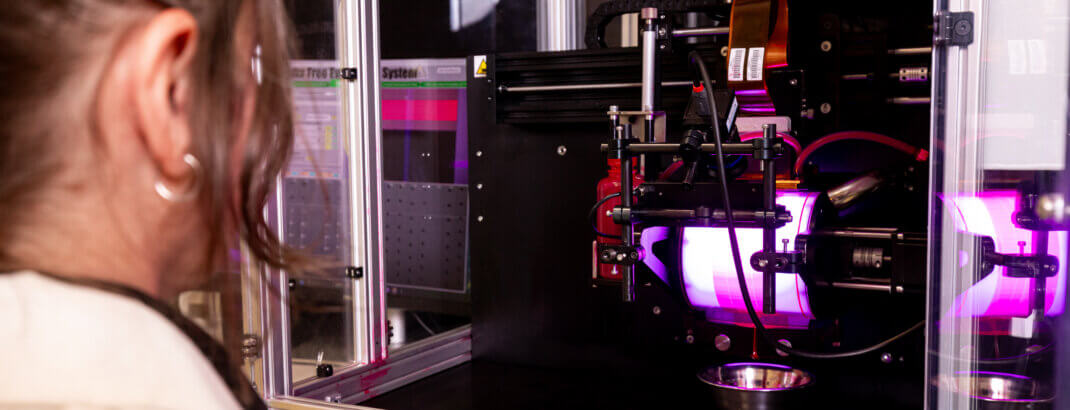
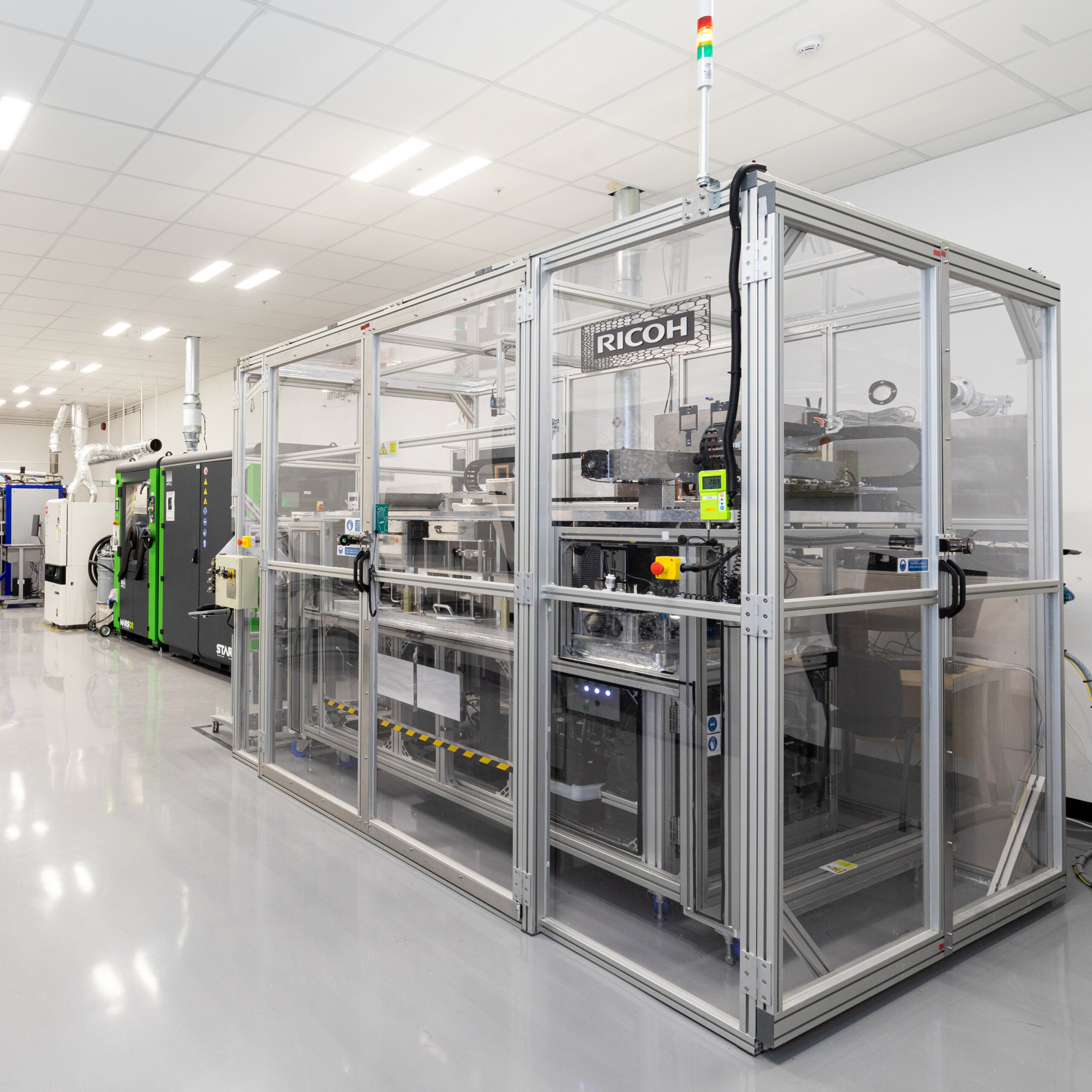
A clear example can be seen in Ricoh’s own ecosystem: Ricoh GEN5 inkjet heads are integrated into Ricoh 3D’s unique aluminium binder jetting system. Here, inkjet technology is not simply adjacent to additive manufacturing – it is a core enabler of the process itself. This crossover highlights how inkjet expertise can be directly leveraged to advance industrial AM platforms.
Accelerating Product Development in the Inkjet Space
One of the most immediate benefits of combining additive manufacturing with inkjet development is speed.
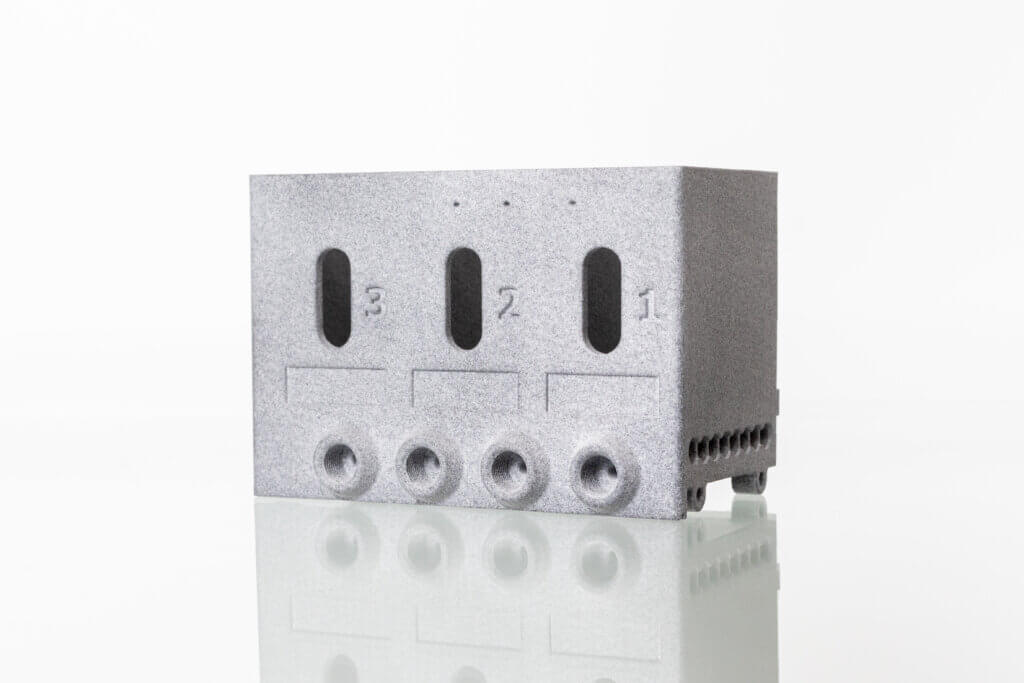
In the inkjet industry, product development cycles are under constant pressure. Components such as fluid handling parts, brackets, housings, manifolds and functional prototypes often need to be iterated multiple times before final approval. Traditional manufacturing methods can slow this process significantly.
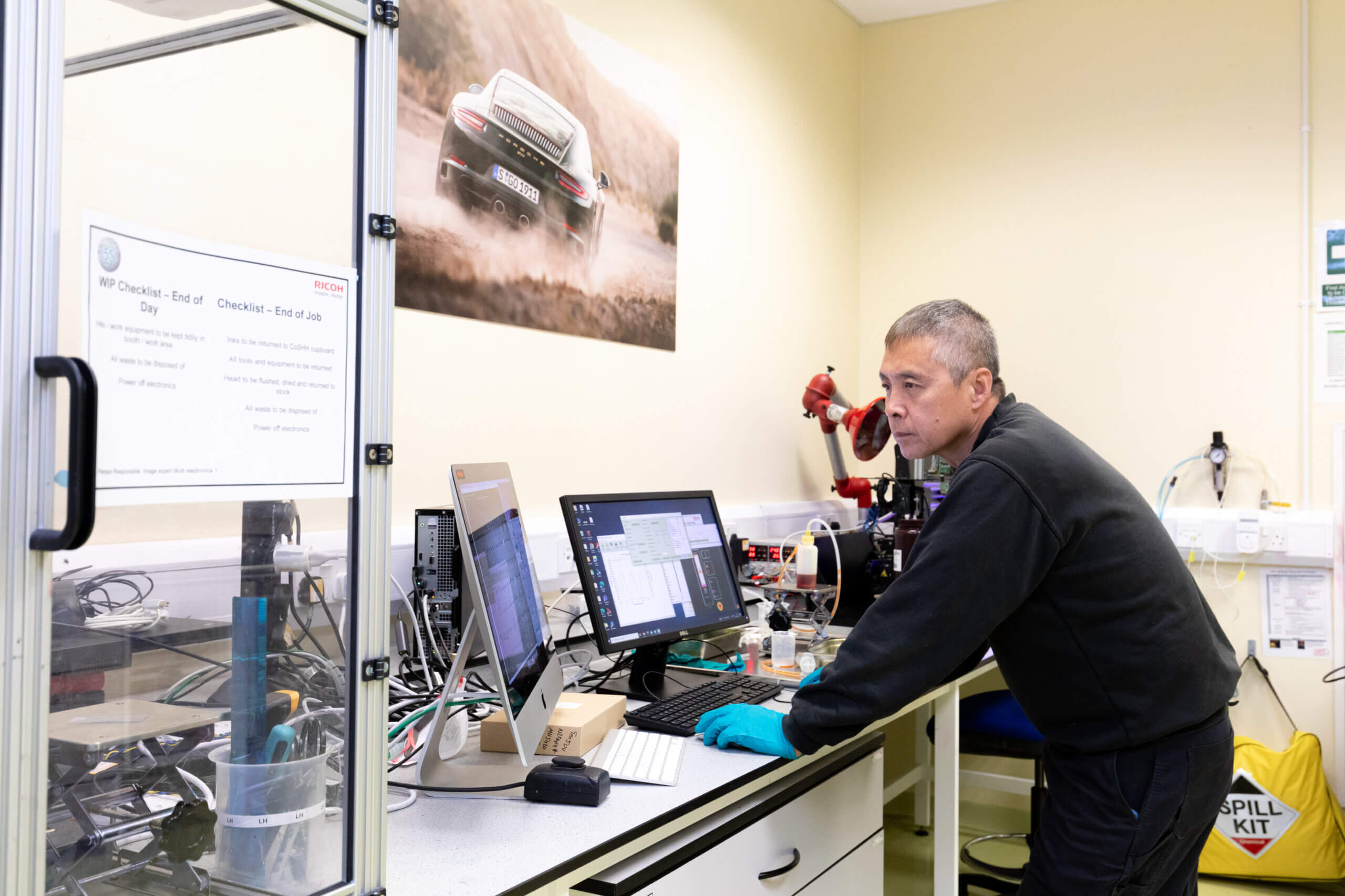
By using additive manufacturing, RPSE has been able to compress development timelines dramatically, moving from concept to functional parts in as little as one to two weeks. This has recently been demonstrated within the Integrated Services business area, supporting wide format digital printing systems.
Key benefits include:
- Rapid iteration of inkjet-specific components
- Part optimisation through DfAM
- Early validation of form, fit and function
- Faster transition from prototype to system integration
- Reduced reliance on long-lead tooling

Richard Minifie, Senior Engineer
“This agility allows inkjet engineers to test ideas earlier, ‘fail faster’ where necessary, and bring refined solutions to market more quickly – as has been evidenced in Ricoh’s 3D Academy”, according to Senior Engineer, Richard Minifie.
Enabling Closer Collaboration with System Integrators
The synergy between additive manufacturing and inkjet also creates new opportunities for collaboration with system integrators.
Inkjet systems are rarely standalone. They are integrated into complex production environments, often tailored to specific substrates, workflows or customer requirements.
Additive manufacturing enables highly customised parts to be produced on demand, supporting system integrators with:
- Bespoke mechanical components
- Low-volume or one-off adaptations
- Rapid design changes late in the project lifecycle
- Faster on-site or pre-installation problem solving
This flexibility strengthens partnerships across the value chain and allows Ricoh to respond more dynamically to integrator and end-customer needs. The technologies enable faster development cycles, lower costs and quicker, often more aggressive go-to-market strategies.
Broader Industry Synergies Between AM and Inkjet
Beyond Ricoh’s own operations, the convergence of additive manufacturing and inkjet is creating wider industry opportunities:
1. Functional Prototyping with Real-World Performance
Inkjet systems often handle aggressive inks and tight tolerances. Additive manufacturing allows prototypes to be tested under realistic conditions, not just as visual models.
2. Design Freedom for Performance Optimisation
AM enables geometries that are impossible or impractical with traditional manufacturing, such as internal channels, lattice structures and weight-optimised parts – all highly relevant for ink delivery, cooling and system efficiency.
3. Digital Manufacturing Consistency
Both AM and inkjet are inherently digital processes. This alignment supports traceability, repeatability and data-driven optimisation across the product lifecycle.
4. Reduced Inventory and Localised Production
Additive manufacturing supports on-demand production of spare parts and low-volume components, reducing stockholding while increasing responsiveness – a growing priority in the inkjet industry.
5. Sustainability Gains
By minimising waste, reducing tooling and enabling lightweight designs, the combined use of AM and inkjet can contribute to more sustainable manufacturing practices.
Scope for Further Synergy
But, despite these advantages and growing partnerships, the synergy between additive manufacturing and inkjet remains largely untapped across the wider European industry…
Many organisations still view the technologies in isolation, rather than as complementary tools within a single digital manufacturing ecosystem.

Mark Dickin, Head of Additive Manufacturing & Applications
Said RPSE’s Head of Additive Manufacturing & Applications, Mark Dickin: “At RPSE, the close relationship between inkjet expertise and additive manufacturing innovation at Ricoh 3D is unlocking new ways to deliver value – not only through faster development and greater flexibility, but through deeper collaboration with partners and customers.
“Since 2019, as a business, we can confidently say that ‘we are our own best customers’ within the Ricoh Group. Applying our own technologies within the organisation allows us to continually evolve, and provide credible, proven services and solutions to our customers and partners.”
He added: “The convergence of these two technologies represents a powerful opportunity: to rethink how inkjet systems are designed, developed and delivered, and to create smarter, faster and more responsive solutions for the future of digital printing.”
Explore Integrated Solutions with Ricoh 3D
Contact Ricoh 3D today to discuss how integrated additive manufacturing and inkjet technologies can bring new value to your products, systems and customers.